
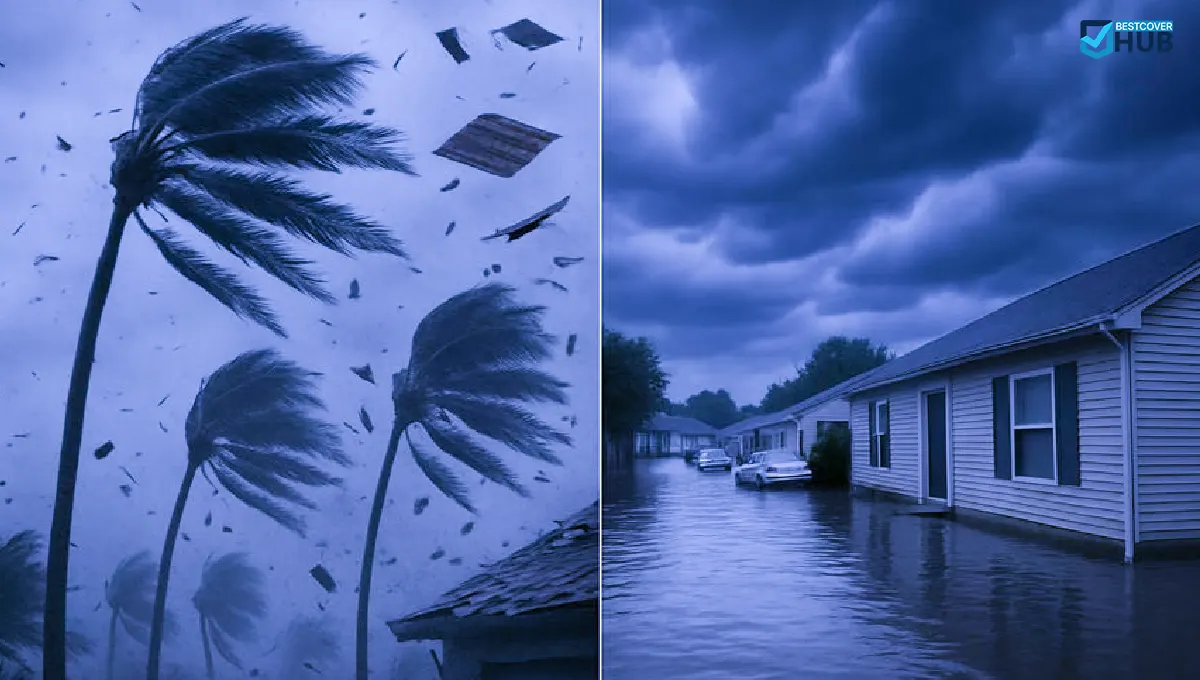
Seeing a 2%, 5% or 10% hurricane deductible on your insurance policy can be confusing. Unlike a standard deductible, which is usually a fixed amount, a hurricane deductible is often based on a percentage of your home's insured dwelling coverage. That small percentage can translate into a significant out-of-pocket responsibility after a storm.
The confusion does not stop there. Hurricane, wind, flood and named-storm coverage can work differently depending on your policy and location. If you live in a coastal area, understanding these terms before a storm hits can help you avoid unexpected coverage gaps and financial surprises.
Quick Overview
A hurricane deductible can be confusing, especially when it is listed as a percentage instead of a fixed amount. This guide explains how hurricane and named storm deductibles work and when they may apply. It also breaks down the key differences between wind and flood damage insurance. Learn what hurricane insurance may cover and where common coverage gaps can appear. Understanding your policy now can help you make smarter coverage decisions before the next storm.
What Is a Hurricane Deductible?
A hurricane deductible is the portion of a covered hurricane-related loss that you are responsible for paying before your insurance coverage applies according to the terms of your policy. Unlike a standard deductible, it may be calculated as a percentage of the insured value of your home's dwelling.
For example, if your policy has a 5% hurricane deductible, the insurer applies that percentage to the dwelling coverage amount specified in your policy. The higher the insured value of the dwelling, the higher the potential deductible can be.
This is why homeowners should not look at the percentage alone. It is important to understand what that percentage means for your specific policy and what you could be responsible for paying after a covered storm loss.
Florida's Department of Financial Services notes that hurricane deductibles can commonly be 2%, 5% or 10% of the amount of insurance covering the dwelling.
Why Does the Percentage Matter?
A percentage deductible can have a much bigger impact than it first appears. Two homeowners with the same percentage deductible may have very different out-of-pocket responsibilities because their homes have different dwelling coverage limits.
The key point is simple: the percentage is applied to the insured dwelling amount, not simply to the cost of the damage.
That means a homeowner should always look beyond the percentage printed on the policy. Check the dwelling coverage limit, understand how the deductible is calculated and consider whether you could manage that expense after a major storm.
Hurricane Deductible vs Standard Deductible
Your homeowners insurance policy may include more than one deductible. A standard or "all other perils" deductible may apply to certain covered losses that are not subject to a special deductible, while a hurricane deductible applies to qualifying hurricane-related losses.
This difference matters because your hurricane deductible may be substantially higher than your regular deductible.
The Florida Department of Financial Services recommends that homeowners understand the difference between their hurricane deductible and their all-other-perils deductible before a storm occurs.
Before renewing your policy, check both deductibles and understand which types of damage can trigger each one.
What Is a Named Storm Deductible?
A named storm deductible is a special deductible that may apply when damage is caused by a storm that meets the definition specified in your insurance policy.
It is important to understand that a named storm deductible is not automatically the same as a hurricane deductible. The terms can vary between insurance companies, policies and states.
Your policy should explain what qualifies as a named storm, when the deductible applies and which types of damage are subject to it.
If you live in a hurricane-prone area, reviewing this information before storm season can help you understand your potential financial responsibility.
Hurricane vs Wind vs Flood: What's the Difference?
A hurricane can cause several types of damage during the same event, but those losses may not all be covered by the same insurance policy.
Wind can damage your roof, siding, windows, doors and other parts of your home. Floodwater and storm surge can cause a different type of loss, affecting floors, walls, furniture and other property.
In Florida, the Department of Financial Services explains that hurricane coverage generally applies to qualifying windstorm damage during a hurricane and does not include flooding.
Flood insurance works differently. FEMA's National Flood Insurance Program explains that most homeowners insurance policies do not cover flooding, while flood insurance can provide coverage for qualifying flood damage.
So, simply having homeowners insurance does not necessarily mean you have protection against every type of hurricane-related damage.
Wind vs Flood Damage Insurance
Understanding the difference between wind and flood damage is particularly important for coastal homeowners.
Imagine a hurricane damages your roof with strong winds. Rain then enters through the damaged area and affects the interior of your home. Depending on your policy and the circumstances, this may be treated differently from a situation where storm surge pushes water into the property.
Now consider a hurricane that causes coastal flooding and water enters your home from rising floodwater. That may fall under flood insurance rather than standard homeowners coverage.
FEMA explains that flood insurance can cover qualifying physical damage directly caused by flooding, including certain damage associated with storm surge, heavy rainfall and overflowing bodies of water.
The cause of the damage matters, which is why homeowners should understand both their property insurance and flood insurance before hurricane season.
Hurricane, Wind and Flood Coverage at a Glance
The exact coverage depends on your policy language, exclusions, limits and the cause of the damage.
How Does a Hurricane Deductible Work in Florida?
The hurricane deductible percentage in Florida deserves particular attention because the state has specific rules governing hurricane deductibles.
Florida insurers generally must offer certain hurricane deductible options, including 2%, 5% and 10%, along with other applicable options and exceptions.
The important thing for homeowners is understanding how the selected percentage applies to their dwelling coverage. A higher percentage can mean a greater out-of-pocket responsibility after a covered hurricane loss.
Florida also has specific rules about when a hurricane deductible applies. The Florida Department of Financial Services explains that the hurricane deductible period begins when a hurricane warning is issued for any part of Florida and ends 72 hours after the last hurricane watch or warning is terminated.
Because these rules can be detailed, homeowners should review their actual policy and applicable state requirements rather than making assumptions about when a deductible will apply.
Can You Have Both Hurricane and Flood Insurance?
Yes. In fact, having both types of protection can be important for homeowners who face hurricane and flood risks.
A homeowners or wind policy may provide coverage for qualifying wind-related damage, while a flood policy can provide protection for qualifying flood losses. Because a single hurricane can cause both types of damage, homeowners may need to rely on more than one policy after a storm.
FEMA explains that homeowners may need to file claims with both insurers when a storm causes both wind and flood damage.
If you are reviewing your current protection, you can start with a homeowners insurance quote and flood insurance quote.
How to Check Your Hurricane Deductible
The best place to start is your policy's declarations page. Look for terms such as hurricane deductible, named storm deductible, wind deductible and all other perils deductible.
If your deductible is listed as a percentage, check what coverage amount that percentage is applied to. Don't assume that the percentage applies to the cost of repairs or the total value of your claim.
Then review your flood insurance separately. Check its deductible, coverage limits, exclusions and waiting requirements so you understand how it works alongside your homeowners policy.
If you own a condominium, your insurance needs may differ from those of a single-family homeowner. You can review a condo insurance quote to consider coverage for your unit and belongings.
Landlords also have different property risks and may need coverage designed for rental properties. A landlord insurance quote can help you review those options.
Florida homeowners can also review home insurance options in Florida to better understand coverage considerations that may apply in the state.
What Does Hurricane Insurance Cover?
The phrase hurricane insurance can sometimes create confusion because there is not necessarily one standalone policy that covers every type of damage caused by a hurricane.
Depending on your location and policy, hurricane-related protection may involve homeowners insurance, windstorm coverage and separate flood insurance.
Homeowners or wind coverage may protect against qualifying wind-related damage, subject to policy terms, limits, exclusions and applicable deductibles. Flood insurance may protect against qualifying flood damage, including certain storm surge losses.
What Happens When Wind and Flood Damage Occur Together?
A hurricane does not always cause one type of damage at a time. Wind can damage a roof while floodwater enters the home. Heavy rainfall can cause flooding while debris damages windows and siding.
When multiple causes are involved, determining the source of the damage can become important during the claims process.
Your homeowners or wind policy may respond to qualifying wind damage, while your flood policy may respond to qualifying flood damage. Each policy can have its own deductible, exclusions and coverage limits.
That is another reason why understanding your policies before a storm is so important. You don't want to discover after the event that you were relying on one policy to cover risks that were actually handled by another.
What Coastal Homeowners Should Do Before a Storm
Don't wait for a hurricane warning to learn how your deductible works. Review your policy while the weather is calm. Find your hurricane, named-storm, wind and standard deductibles. If a percentage applies, understand what coverage amount it is based on.
Then review your flood protection separately. Make sure you understand what is covered, what is excluded and which deductible would apply to a flood-related claim.
It is also smart to create a home inventory. Take photos or videos of your belongings and keep important documentation in a secure location. This can make the claims process easier if your property is damaged.
If anything in your policy is unclear, contact your insurer or insurance professional before hurricane season becomes active.
Conclusion
A hurricane deductible is more than a percentage printed on an insurance policy. It determines how much of a covered hurricane-related loss you may have to handle before your insurance coverage responds. Understanding the difference between hurricane, named-storm, wind and flood coverage can help coastal homeowners identify potential gaps and make better coverage decisions. Don't just know your deductible percentage, know what it applies to, when it can be triggered and how it works alongside your flood coverage.
Frequently Asked Questions
1. What is a hurricane deductible?
A hurricane deductible is the portion of a covered hurricane-related loss that the homeowner is responsible for paying before insurance coverage applies according to the policy terms. It may be calculated as a percentage of the home's insured dwelling coverage.
2. How does a percentage hurricane deductible work?
A percentage deductible is calculated using the applicable dwelling coverage amount specified in the policy. The percentage itself does not represent a portion of the repair bill.
3. Is a named storm deductible the same as a hurricane deductible?
Not necessarily. A named storm deductible and hurricane deductible can have different definitions and triggering conditions depending on the insurance policy and state regulations.
4. Does homeowners insurance cover hurricane flooding?
Generally, standard homeowners insurance does not cover flood damage. Separate flood insurance can provide coverage for qualifying flood losses, including certain storm surge damage.
5. What does hurricane insurance cover?
Coverage depends on the policy. Homeowners or wind coverage may cover qualifying wind-related damage, while flood insurance can cover qualifying flood damage. The cause of the loss, policy terms and applicable deductible determine how a claim is handled.
6. Can I have both homeowners and flood insurance?
Yes. The two policies can provide different types of protection. Homeowners or wind coverage may address qualifying wind damage, while flood insurance can address qualifying flood damage.